5 Actionable Ways to Reduce In-Store Shrinkage and Shoplifting
For brick-and-mortar retailers, shrinkage—the loss of inventory due to shoplifting, employee theft, checkout errors, or damaged goods—is a continuous drain on profits. In India, retail shrinkage accounts for significant losses, sometimes wiping out entire net margins.
Traditional security mirrors, tags, and human guards are no longer sufficient against organized retail theft. However, by deploying Retail AI Analytics systems over existing in-store camera streams, store operators can actively audit security vulnerabilities and prevent theft in real-time. Here are five actionable ways to reduce shrinkage in your retail locations today.
"Active theft prevention is not about confronting suspects at the exit; it is about recognizing concealment behaviors early to intervene before the theft takes place."
1. Deploy Behavior-Based Shoplifting Detection
AI models do not simply flag when a customer touches an item. Instead, they track complex skeletal motion profiles associated with concealment—such as stuffing merchandise under clothing, sliding products into personal bags, or placing items directly into open purses. When a pattern matches, the system triggers a localized, silent notification to floor staff with a 10-second video clip, allowing them to offer customer assistance and disrupt the theft naturally.
2. Audit Self-Checkout Anomalies
Self-checkout lanes are highly vulnerable to ticket-switching (swapping barcodes of expensive items with cheaper ones) or "missed scans" where items pass directly into shopping bags. Vision sensors positioned above checkout stations reconcile visual object classifications against POS receipt streams in real-time, instantly notifying cashiers of discrepancy items.
3. Optimize Store Layouts with Heatmap Analytics
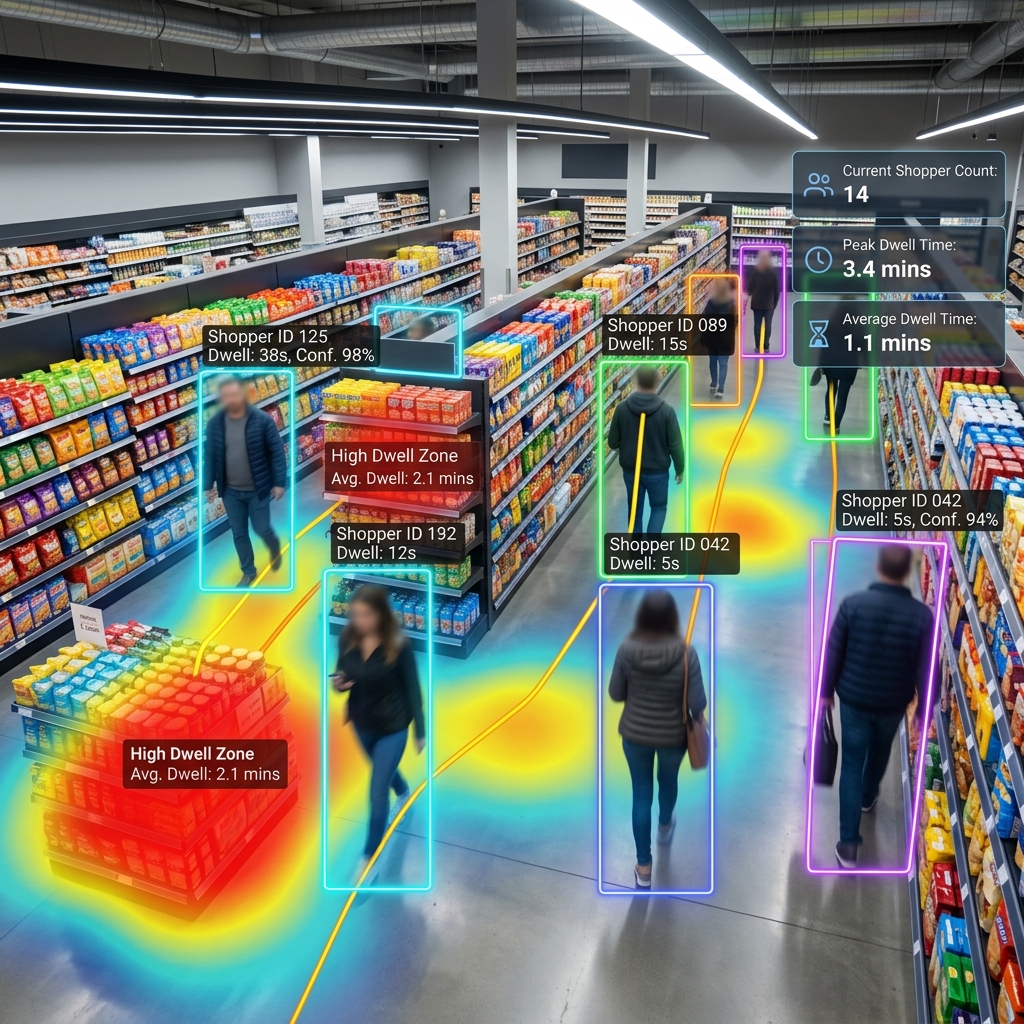
Shoplifting occurs most frequently in blind spots or "dead zones" where customer foot traffic is low and visual monitoring is poor. AI flow heatmaps reveal under-visited areas in your store. Rearranging shelf layouts, shifting high-value categories into busier corridors, or increasing lighting in dead zones can reduce opportunistic theft by up to 30%.
4. Monitor Queue Length & Reduce Wait Times
Long checkout queues lead to basket abandonment, where frustrated customers leave items on shelves, increasing accidental damage and shrinkage. AI queue analytics count waiting customers and predict checkout delays, automatically alerting store managers to open additional registers before queues overflow.
5. Standardize Employee POS Monitoring
Internal theft at point-of-sale terminals, such as unauthorized cash-drawer openings or manual voids when no customer is present, remains a major component of retail shrinkage. Integrating AI surveillance with POS logs enables operators to query every void receipt and automatically retrieve matching video snippets, simplifying compliance audits.






Srinidhi Rao Reply
We implemented the self-checkout scan auditor last month in our Chennai outlet. It has already caught several barcode swaps on cosmetics. The system is incredibly accurate and doesn't annoy regular shoppers.